
Blountstown Birth and Death Records
Calhoun County genealogy research reveals family history in the Florida Panhandle. The county formed in 1838 and was named after John C. Calhoun. Records span over 180 years. The county seat is Blountstown. You can find birth records, marriage licenses, and death certificates. The Clerk of Court maintains court records. The Apalachicola River forms the eastern border. This waterway shaped early settlement patterns.
Calhoun County Quick Facts
Calhoun County Clerk of Court Records
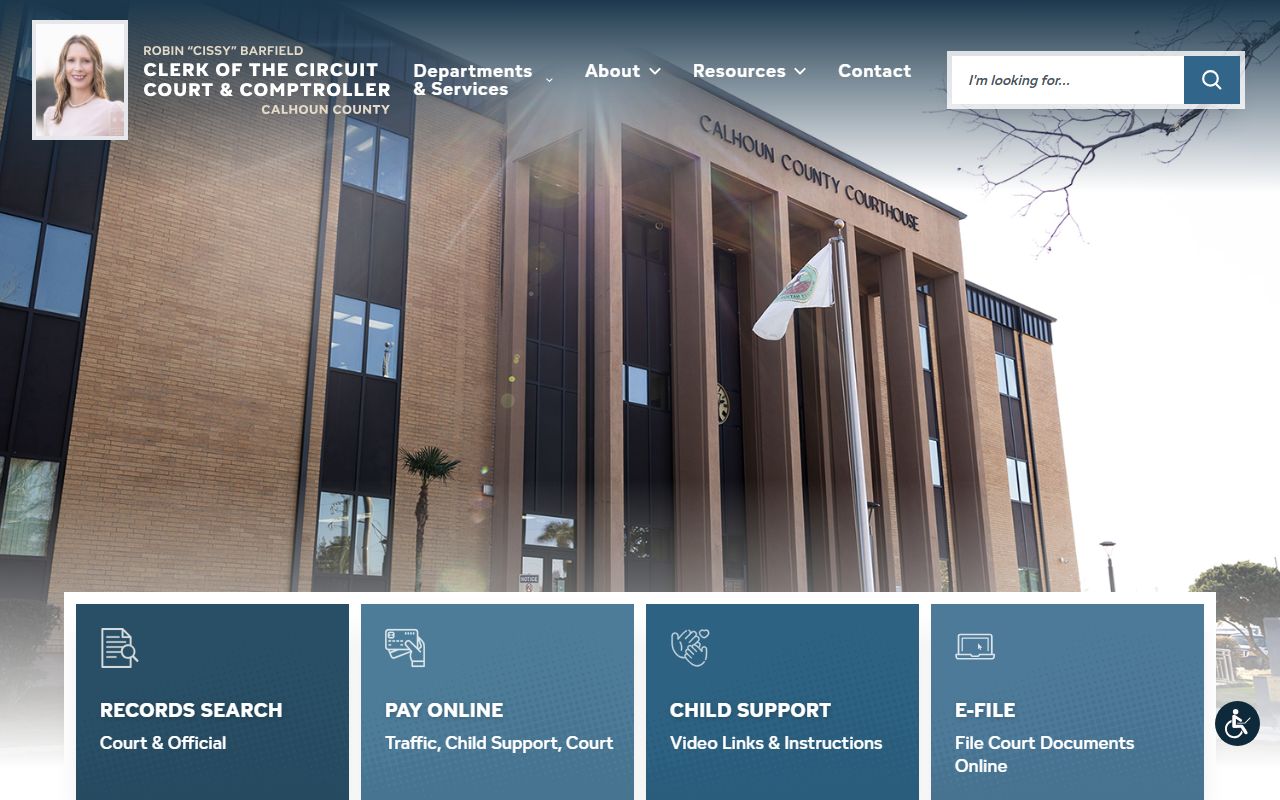
The Clerk of Court maintains vital records under Chapter 119 of the Florida Statutes. This office stores marriage licenses and court documents. You can search official records online or visit in person. The courthouse is in Blountstown. Staff can help locate documents. Many records have been digitized.
Marriage records before 1927 are at the county level while the state holds records from June 6, 1927 forward under Chapter 382 of the Florida Statutes. Probate records show estate settlements. These files contain family relationship details. Court records document legal matters.
Contact the Calhoun County Clerk at 20859 Central Avenue East, Blountstown, FL 32424. Call 850-674-4545.
Florida State Archives Genealogy Resources
The State Archives of Florida contains Calhoun County resources. Confederate Pension Applications include local veterans. Spanish Land Grants show original property owners. You can access these in Tallahassee.
Visit the State Archives of Florida for access to these collections. The State Archives is the central repository for Florida history. They have records from all 67 counties. Their genealogy collection is excellent. You can find census records and military files. Land grants trace original ownership. Voter registration lists are available too. The 1867-68 voter rolls are significant. They include African American men who could vote for the first time.
Bureau of Vital Statistics for Calhoun County
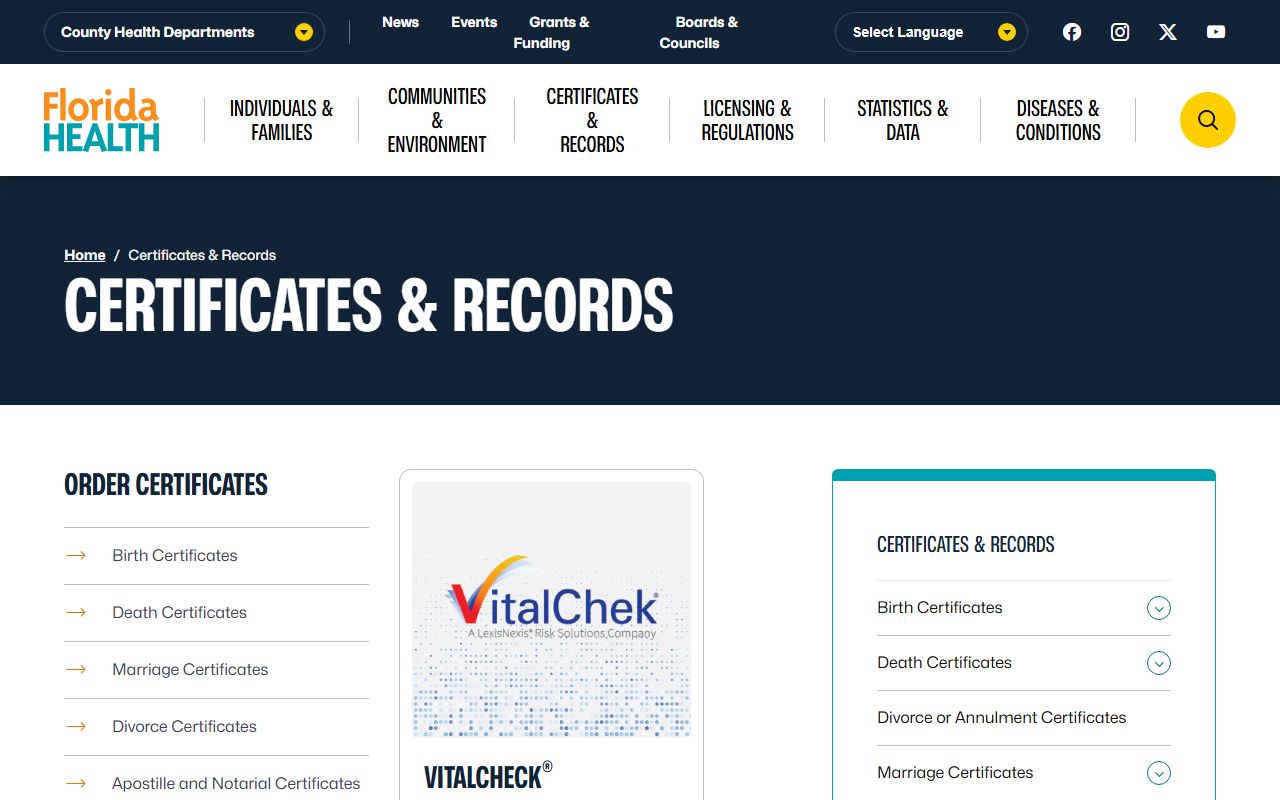
The Florida Bureau of Vital Statistics keeps birth and death records under Chapter 382 of the Florida Statutes. Birth records are available from 1917. Death records go back further. This office serves all Florida counties. They issue certified copies of vital records.
Birth certificates less than 125 years old are restricted under Florida law, with access limited to the person named on the record, parents listed, legal guardians, or legal representatives. You must show valid identification. Marriage records from June 6, 1927 are at the state level.
Order through VitalChek.
Call 877-550-7330.
Calhoun County Property and Land Records
Property records in Calhoun County trace land ownership patterns recorded under Chapter 119 of the Florida Statutes. The Property Appraiser maintains these documents. Deeds show property transfers. Maps display boundaries. These records help reconstruct communities.
Visit the county website for searches. The online portal provides access to records. You can view documents from home. The records begin in the 1800s. Early deeds were handwritten. They often name family members in the descriptions. Look for terms like "heirs of" or "widow of." These indicate estate transfers.
Calhoun County Pioneer History
Calhoun County ranks among Florida's oldest counties. The area was once home to the Apalachicola tribe. Early white settlers arrived in the 1820s. They came from Georgia and Alabama. Many sought new land after Indian removal.
The county was named for John C. Calhoun. He was a famous statesman from South Carolina. Timber became the main industry. Pine trees covered the land. Sawmills dotted the rivers. Steamboats carried goods to market. Many families worked in the lumber trade. Their labor built the local towns. The river towns were busy places. Commerce flowed up and down the Apalachicola.
Calhoun County Genealogy Research Tips
Start with family documents. Gather names and dates. Check church records. Many families attended small rural churches. Their records may be in church basements or attics.
Census records document Calhoun County families from 1840. Track families across years. The area was part of other counties before 1838. Check records from Jackson and Washington counties for earlier families. Many settlers moved from these areas.
Visit the State Library Genealogy Page for help. The page lists research strategies. They also recommend online databases. You can access many from home with a library card.
Calhoun County Church Records
Church records predate civil vital records in many cases. Calhoun County churches kept baptism and marriage records. These document early family events. The county was settled by people of various faiths. Baptist and Methodist churches were common. Some congregations date to the 1840s. Their records may still exist in church safes.
Contact current churches for historical records. Some have transferred old books to the State Archives. The Archives holds microfilm of some church registers. Denominational archives may also have copies. The Southern Baptist Historical Library is one example. They preserve records from defunct congregations. These can be valuable when civil records are missing.
Nearby Counties for Genealogy Research
These counties border Calhoun County. Your ancestors may have lived in or moved to these areas. Check records in neighboring counties. Panhandle families often crossed county lines. The terrain made travel between counties easy.