
Fort Myers Family History
Lee County genealogy research opens doors to your family past on Florida's Gulf Coast. The county formed in 1887 and named for Confederate General Robert E. Lee. Fort Myers serves as the county seat and holds all vital records. The area has deep ties to Seminole Wars history and pioneer settlement. Records here stretch back to the late 1800s. You can find birth certificates, death records, and marriage licenses.
Lee County Quick Facts
Lee County Clerk of Court Records
The county holds court files and land deeds too. Many families came to farm and fish in this region. Local archives preserve this pioneer heritage.
Lee County Clerk of Court maintains vital records for family history research under Chapter 119 of the Florida Statutes. This office holds marriage licenses, court cases, and probate files dating back to the county's formation. You can visit the office in Fort Myers to search records in person. Staff members help find historical documents and make certified copies. State laws govern record retention and access.
Marriage records before 1927 stay at the clerk's office. State records only cover June 6, 1927 forward per Chapter 382 of Florida Statutes. For older marriage licenses, you must check with the Lee County Clerk directly. Probate records show how estates were divided among heirs and family members. These files list relationships and assets in detail. They often contain the only record of family connections from the 1800s. Land deeds trace property through generations of Lee County families. Court records reveal disputes and legal matters involving ancestors.
Contact the Lee County Clerk of Court at 1700 Monroe Street, Fort Myers, FL 33901. Call (239) 533-5000 for information.
Florida State Archives Collections
State Archives of Florida contains materials for Lee County genealogy research. Confederate Pension Applications provide detailed family information about veterans who lived in the region. Spanish Land Grants show original property owners from 1821. The 1867-68 Voter Registration Rolls are vital for African American genealogy research.
Access these collections at the State Archives of Florida in Tallahassee. The archives open Monday through Friday from 9:00 a.m. to 4:30 p.m. Call (850) 245-6700 before visiting to confirm hours. Search online catalogs to plan your research before making the trip. Confederate pension files include the veteran's service unit and residence at time of application. Many files list widows and dependents who survived. These help connect Civil War era families in the area.
Bureau of Vital Statistics Records
Florida Bureau of Vital Statistics holds Lee County birth and death records. Birth records begin around 1917, though earlier records are incomplete. Death records extend further back in time. You can request certified copies online or by mail.
Confidential birth records are protected under Florida law. Records less than 125 years old have access limits to protect privacy. Only specific people can obtain copies, including the person named, parents, and legal guardians. Valid photo identification is required for all requests. State marriage records cover June 6, 1927 to present. Earlier marriages are found only at county clerk offices. Death records without cause of death are public under Chapter 119. The cause remains private for 50 years. This balance protects privacy while allowing historical research.
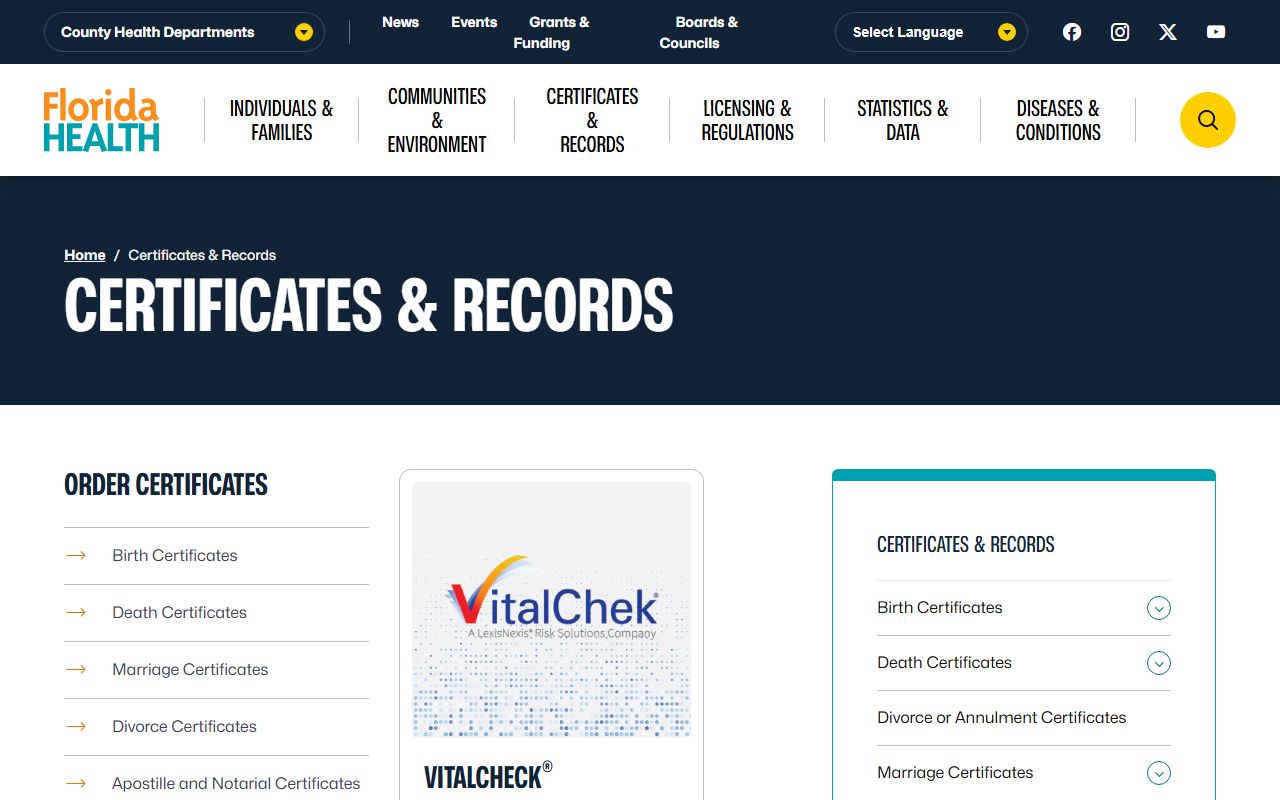
Order records through VitalChek for convenience.
Bureau of Vital Statistics is located at 1217 N. Pearl Street, Jacksonville. Phone 877-550-7330 for assistance.
Lee County Genealogy Research Tips
Success starts with family stories. Interview older relatives.
Census records track Lee County families over time. Federal census began for this area in 1890. Look at neighboring counties too, as borders changed over the years. Families moved between counties frequently. Check all possible locations for your ancestors.
Church records supplement official documents. Many families attended local churches.
Visit the State Library Genealogy Page for database access. The library has research tools available. These databases help build your family tree by connecting local records to national sources. Staff can guide you to the right materials.
Good notes save time. Write down all sources you check.
Nearby Counties for Genealogy Research
These counties neighbor Lee County. Your ancestors may have lived in multiple counties.