
Miami Marriage and Birth Records
Miami-Dade County genealogy research connects you to South Florida history. The county formed in 1836 as Dade County and was renamed in 1997. Miami serves as the county seat. It is Florida's most populous county. Records here reflect diverse cultural heritage. Many families immigrated through the Port of Miami.
Miami-Dade County Quick Facts
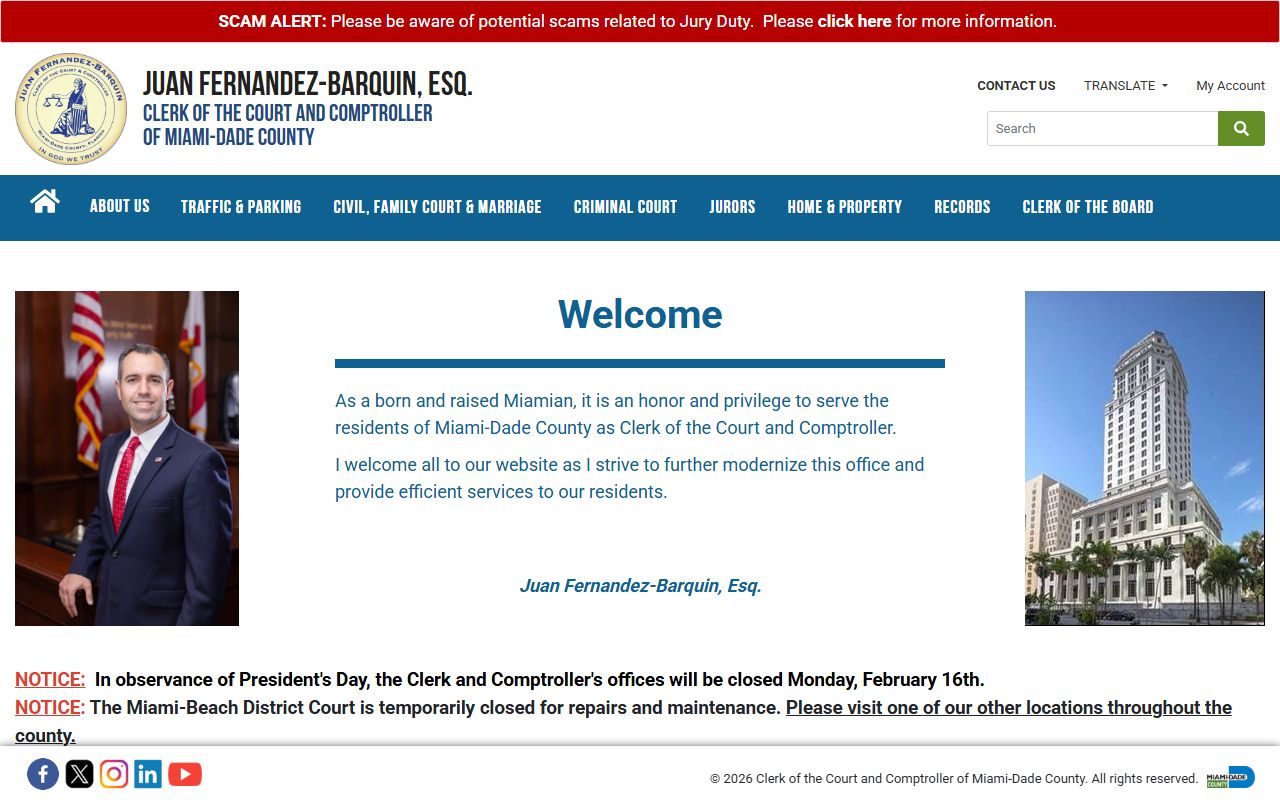
Miami-Dade County Clerk of Court Records
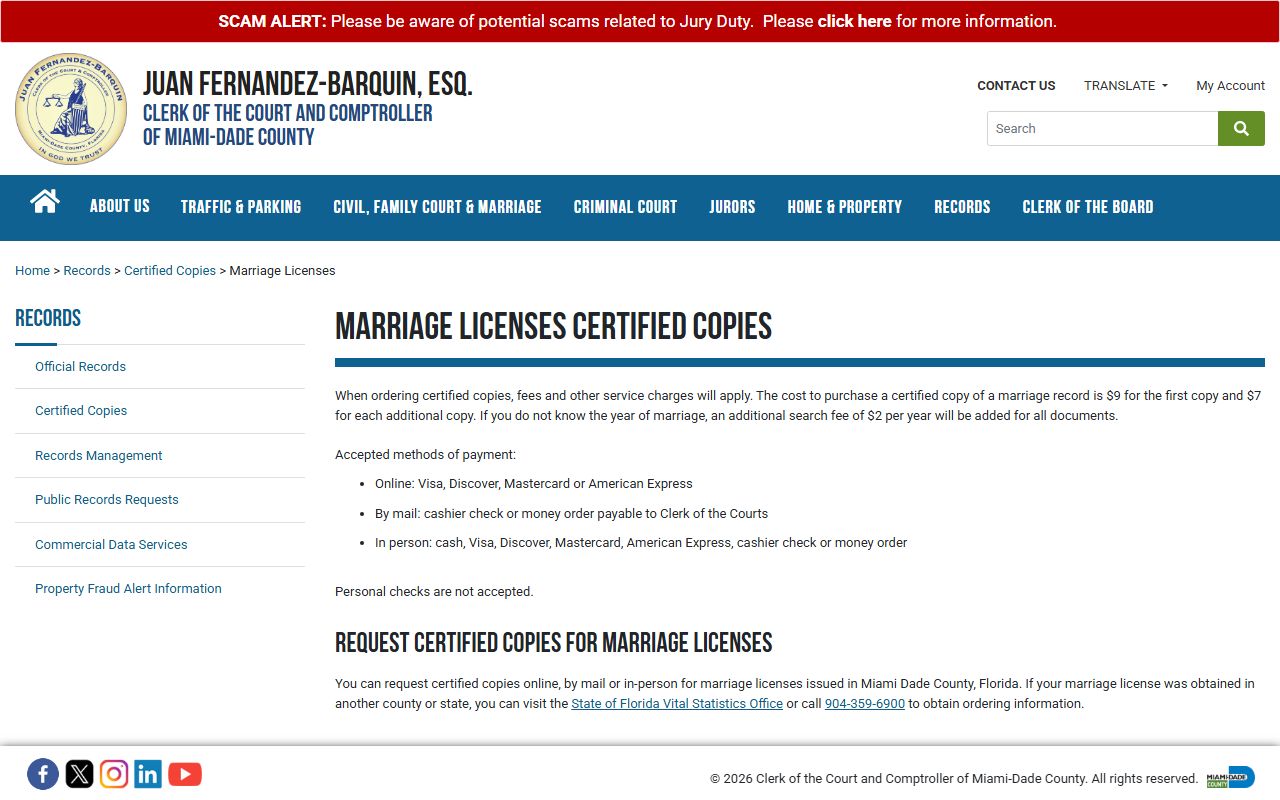
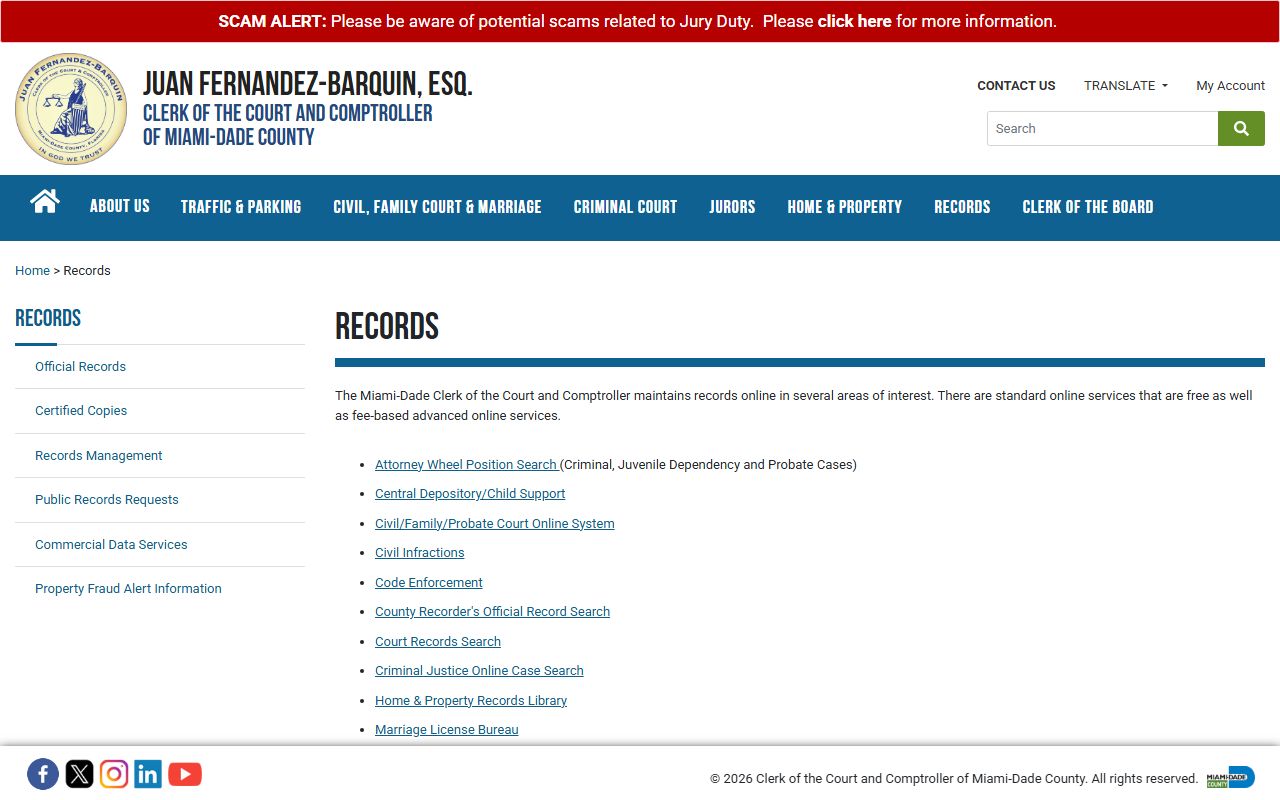
The Clerk of Court maintains official records for Miami-Dade County genealogy research under Chapter 119 of the Florida Statutes ensuring public access to government documents including marriage licenses, court cases, probate files, and land records dating back to 1836. You can visit the office in downtown Miami to search records in person or use online portals. Staff members help find historical documents. Many records are available through digital databases.
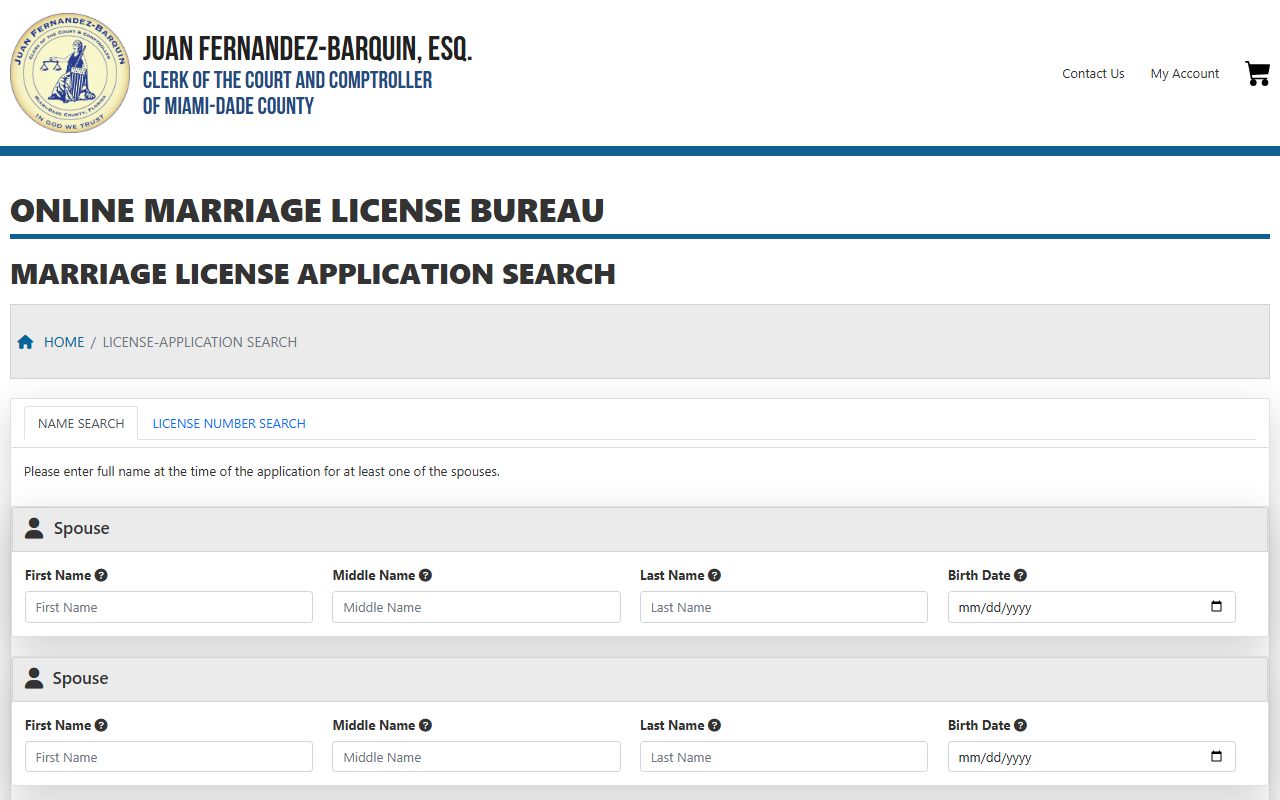
Marriage records before 1927 stay at the county level, while the state only holds records from June 6, 1927 forward under Chapter 382 of the Florida Statutes governing vital statistics and public access to marriage records in Florida. For older marriage licenses, check with the Miami-Dade County Clerk directly. Probate records show how estates were settled and property divided among heirs. These files contain valuable family relationship details. Land deeds trace ownership through generations of Miami-Dade County residents.
Visit the Miami-Dade County Clerk at 73 W. Flagler Street, Miami, FL 33130.
Florida State Archives Collections
The State Archives of Florida holds collections useful for Miami-Dade County genealogy research, including records predating the county's formation and early settlers in territorial records.
Confederate Pension Applications contain family information about veterans in the region. Spanish Land Grants show original property owners from 1821 in the area that became Miami-Dade County. World War I Service Cards document military service. Voter Registration Rolls from 1867-68 include early residents. These records help trace families through multiple generations.
Visit the State Archives of Florida in Tallahassee. Call (850) 245-6700.
Bureau of Vital Statistics Records
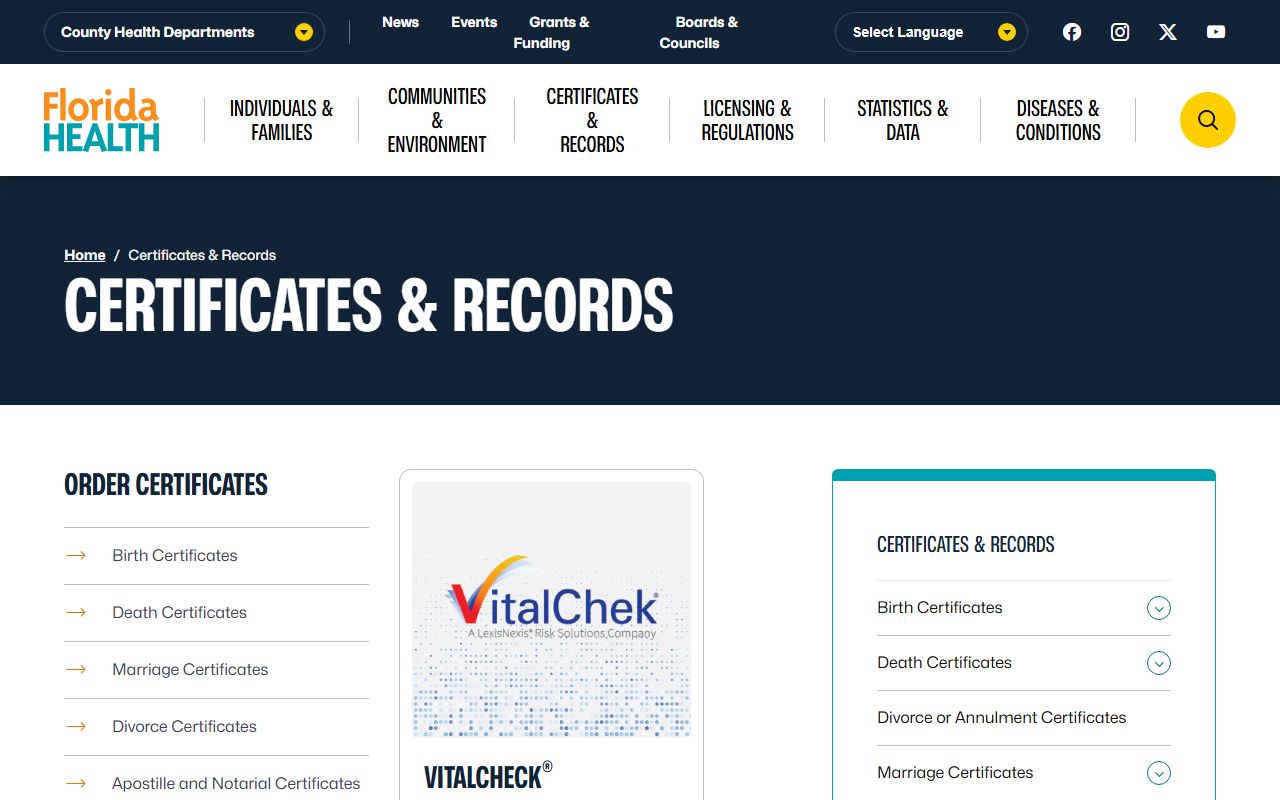
The Florida Bureau of Vital Statistics keeps birth and death records for Miami-Dade County under Chapter 382 of the Florida Statutes governing vital records. Birth records start from 1917. Death records go back further. You can order certified copies.
Birth records less than 125 years old remain confidential under Florida law, with access limited to specific individuals who can show valid photo identification and demonstrate a direct interest in the record. State marriage records cover June 6, 1927 to present. Earlier marriages are at county clerk offices. Death records without cause of death are public. The cause stays private for 50 years.
Miami-Dade County Genealogy Research Tips
Start your Miami-Dade County genealogy search with family information.
Census records are key for this area. Federal census coverage began in 1830 for the region. Look for neighbors with the same surname. Families often settled near each other. Census records show occupation and birthplace.
Newspapers provide additional details.
Visit the State Library Genealogy Page for more resources. The library has databases to help research. These tools connect Miami-Dade County ancestors to wider networks.
Good organization helps your search succeed.
Nearby Counties for Genealogy Research
These counties border Miami-Dade County.